Traditional or infrared
Electric heaters, stoves and wood-fired heaters heat the room, for a higher ambient room temperature.
Infrared (IR) carbon panels or globes use IR energy to penetrate the body or a surface. They are not directly related to heating the room temperature.
Compare the exact models, the space available and the manufacturer’s installation requirements before deciding. Get in contact today for an in-depth conversation about the differences.
Space and placement
Plan the route into the property as carefully as the sauna’s final position. Narrow doorways, stairs, tight corners, parking and heavy components can affect how the installation is organised. Share photos and measurements before delivery.
The site assessment also considers the base, drainage, weather exposure and the position of the power supply. Different models are intended for different settings; some need shelter and some are for indoor use. Check the requirements of the exact model.
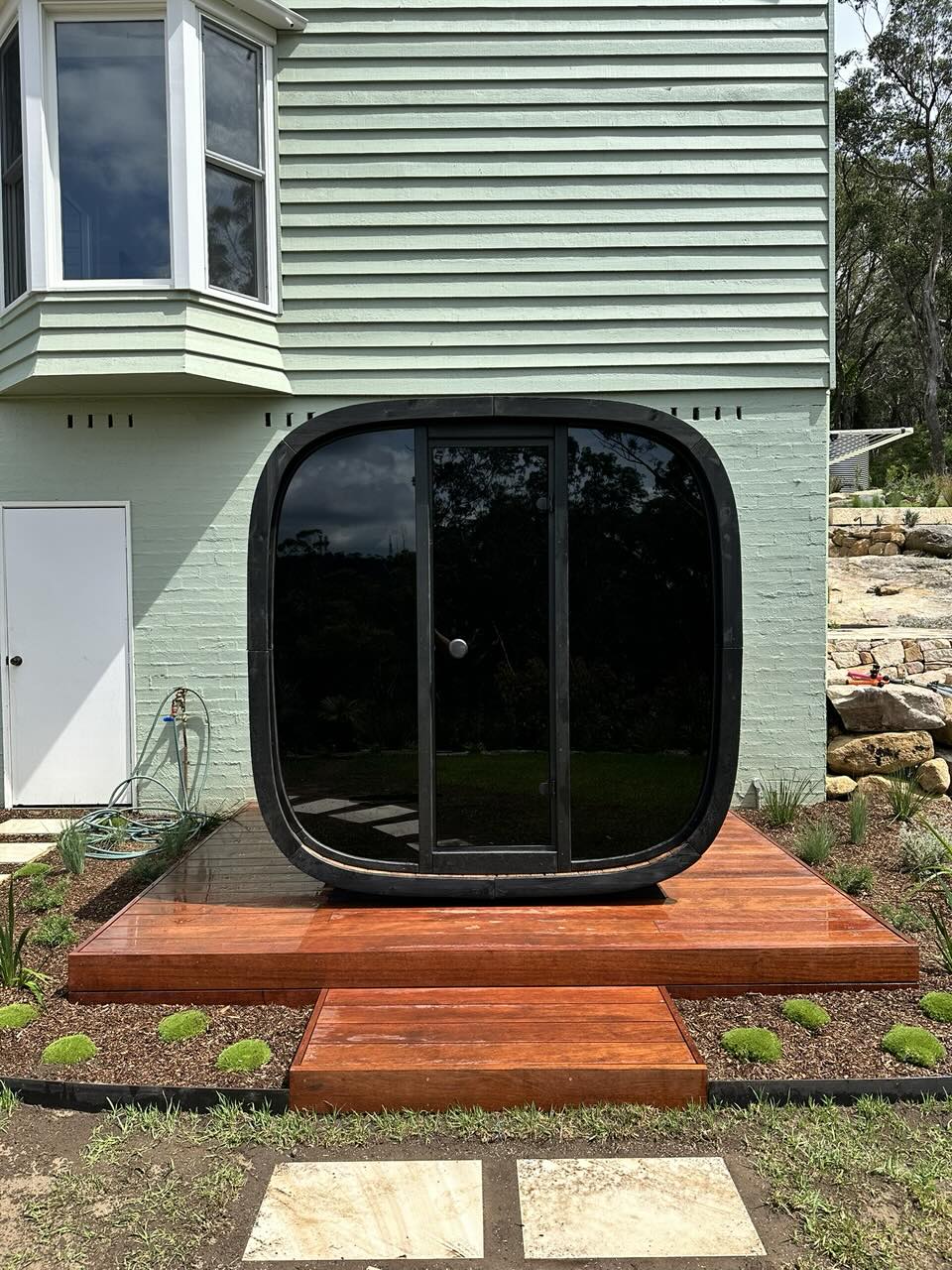
Almost all outdoor saunas must be constructed on a concrete slab, a tiled slab area or a structurally sound deck to maintain the warranty from sauna companies. Saunas cannot be erected or installed on earth, compacted road base or loose pavers.
A builder or landscaper handles any required groundwork, while an electrician assesses and quotes the electrical work separately. Confirm that preparation is complete and delivery is scheduled before agreeing an installation date.
Pre-fab or custom build
Pre-fab (prefabricated) saunas come in wooden or cardboard crates and need professional assembly. Custom saunas are built and designed from the ground up.
Before comparing prices or timelines, check whether the quote covers a freestanding panel-built room, a materials package for a built-in room, or the completed installation. Confirm dimensions, inclusions, site preparation and finishing work for the exact package.